
I know a lot about farming and I know what a farmer is, I was one for the better part of 20 years. When my kids make comments about how much fun they had at their soccer tournaments and sleepovers and ski trips, I jokingly say, “when I was a kid, I was working on the farm.” Yeah, I’m that guy.
I’ve written a lot about farming and every time someone makes a comment about organic this or GMO that or Free Trade or subsidies for “rich farmers,” I have an opinion. I actually hear the voice of my dad yelling in my ear and he’s using bad words. I saw a review of Super Bowl commercials this year and there were several comments that none of them were as good as last year’s “farmer” spot by Dodge with the brilliant voice of Paul Harvey – check it out here if you haven’t seen it in a while.
Well, my dad, Paul Harvey and I saw this story today and couldn’t resist commenting…
Apparently the Minnesota Department of Natural Resources is intervening because a Fargo, ND-based “agriculture firm” is trying to buy 27,000 acres of forest land in north-central Minnesota to convert it to farm land. This particular agriculture firm is called R.D. Offutt and in addition to being the world’s largest potato producer at more than 65,000 acres and the owner of the world’s largest collection of John Deere dealerships (more than 82), they own tens of thousands of acres of land in other states and many other agriculture-related companies as well.
What do they want to do with this new land you might ask? Irrigate it, fertilize it like crazy and plant potatoes that can be turned into frozen french fries for the fast food industry. That doesn’t sound like a good trade to me. The world does have a food crisis but more frozen french fries (and less photosynthesis from trees) is not going to solve it. Now, when I say I was a farmer, I mean the kind that Paul Harvey describes – my family feeds animals by hand, my dad stayed up all night with sows when they were having piglets, we carried calves into our basement and bottle-fed them. I drove tractors and combines and spent hundreds of hours in our fields. That’s what a farmer is. An agriculture firm is not a farmer.
That’s what’s wrong with farming today – there are fewer and fewer farmers. Through its spokesperson, another thing that a farmer does not have, R.D. Offutt said that it was “committed to preserving ground and surface water quality.” I’m not sure that I believe them. My dad never cut down one tree in my whole life time so he could farm more land, in fact, we planted trees and cover crop and my nephew is planting more trees around the home that I grew up in. That’s what a farmer would do.
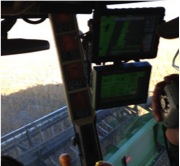
 g something because I’m not real mechanical compared to my brother and nephews. Now, the combine drives itself – quite literally – while using GPS locked onto a Russian navigation satellite that transmits to a receiver mounted on the roof. If that wasn’t enough to blow your mind, all imaginable metrics from the field, the fertilizer used, and the current yield, are monitored by software that is displayed on three iPads mounted in the cockpit. All of this technology has driven yield gains and efficiency, which my dad would have never believed. Global demand for corn and soybeans is rising and my family is doing everything it can to meet that demand – now if they would only get paid a fair price – that’s a whole blog for another time.
 have transformed into a closed loop aquaponics system. What is that you may ask? Basically raising fish in tanks with a twist where the waste from the fish is actually used to fertilize plants, which are in turn grown hydroponically (in water). The whole system relies on some sophisticated filtration but uses very little energy and wastes very little water but on a small scale can produce protein, Tilapia fish,
 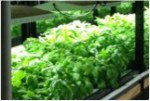 and fresh organic vegetables 24/7/365 in a place like Minnesota where it’s 13 degrees and dark more than it’s light this time of year.
  The view from the suburbs