
So, this is an “off year” election right? Isn’t that what most people call it because our national offices are not on the ballot? Maybe we should call it a “local year” or a “talent pool” year instead because there are a lot of important things on our ballots. You can and should vote for your school board representatives, and at least in Minnesota, your school district referendums – is there anything more important in your local community than the schools? What about the city council? Sometimes people joke that that job is all about stop signs and speed bumps but not in the suburbs where I live – they make important decisions about my taxes that impact transit/traffic, development, and public safety. Any interest in those things?
Even if you say you don’t care about some of these local issues or if you’re too busy to get involved or learn about the issues and the candidates, there’s another reason to vote local. In the corporate world, leadership and human resources talk a lot about the talent pipeline. Who’s the next person that’s ready for a leadership role? If you look at the demographics, the baby boomers are retiring – god bless them – they worked hard, they have experience, but it’s time for them to open the next chapter of their lives. So, you ask yourself two questions – who’s going to take their place and are they ready? In my experience in the corporate world, this is where an impact is being made on diversity. You can count how many women and people of color are in the C-Suite, and we should be doing that. But, another very important measure is about the pipeline. Do we have a diverse candidate pool for key jobs? Are we bringing diverse candidates into the company now and spending time and energy developing them so they are ready to lead?
So, how do you define diversity? There are lots of ways to do it by things like gender and ethnicity but what about experience and thoughtfulness? There’s something to be said for the need for experience both in life and in solving important problems and in managing people – that sets you up to be better at it than people with no experience right? So, why don’t we think about our local elections as the way we build a talent pool for our elected officials? What if we look at our presidential candidates? Are we happy with that talent pool? I’m not. There are people who have served in an elected or appointed capacity but there is no way that they deserve to be president of this great country. There are also people who have never been elected to anything or served anyone and there is no way that they deserve to be president either but they actually start to look pretty good when compared to the other group.
So, let’s vote local this week and build the pipeline for the future. Maybe our kids will actually have national elections where they have to choose between great candidates who are thoughtful, diverse, and experienced? Maybe our kids and their friends will be those leaders? Wouldn’t that be something?
 First, I received a very interesting e-mail from the White House yesterday – take a look at a screen shot of the e-mail here. I have to admit that I have written to the President before. I’m one of “those people” who takes democracy pretty seriously and I’ve been inspired to contact government officials at every level to share my perspective. Have I heard back? Not always, but the closer the branch of government is, the more likely they are to get in touch with you. I think it makes a difference. So, when I saw that a “3M” – not the company, but a “Minnesota Middle-class Mom” was going to be in the First Lady’s box last night, I thought it was great. The President read her letter and came to Minneapolis to buy her lunch and invited her to Washington D.C. so he could use her story. It’s all good theater right? I just wish he’d done a better job staying engaged with “us” all along. He and his campaign team did a great job of getting people energized and involved during his first campaign but to tell you the truth, this is the first e-mail I’ve ever received from him. I think he’s missed a huge opportunity.
 Now don’t get me wrong, I want my kids to be active and involved but to what end? I realize that we are doing this to ourselves. I know that my mom and dad didn’t get up and look at their iPhones and see the message “you have 11 events scheduled.” When I was growing up, there were no multiple activities in one night. We did one thing at a time for the most part. I had some busy times but when I played football, that’s all I did, which was the same with basketball and track & field. How bad is it? My wife is a teacher and she’s had 5th graders suffer from nervous breakdowns caused by stress because of being over-scheduled with sports, music, tutoring, etc. Now, you could argue like “Tiger Mom,” that music and tutoring in math and foreign languages should be the focus. At least you could get some lifetime benefits out of those. What about having fun and playing sports? Do we all think that our kids are going to get full ride scholarships and go pro? Very unlikely, but that’s how we train. Here are a few sports examples from my experience: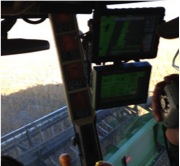
 g something because I’m not real mechanical compared to my brother and nephews. Now, the combine drives itself – quite literally – while using GPS locked onto a Russian navigation satellite that transmits to a receiver mounted on the roof. If that wasn’t enough to blow your mind, all imaginable metrics from the field, the fertilizer used, and the current yield, are monitored by software that is displayed on three iPads mounted in the cockpit. All of this technology has driven yield gains and efficiency, which my dad would have never believed. Global demand for corn and soybeans is rising and my family is doing everything it can to meet that demand – now if they would only get paid a fair price – that’s a whole blog for another time.
 have transformed into a closed loop aquaponics system. What is that you may ask? Basically raising fish in tanks with a twist where the waste from the fish is actually used to fertilize plants, which are in turn grown hydroponically (in water). The whole system relies on some sophisticated filtration but uses very little energy and wastes very little water but on a small scale can produce protein, Tilapia fish,
  and fresh organic vegetables 24/7/365 in a place like Minnesota where it’s 13 degrees and dark more than it’s light this time of year.
  The view from the suburbs