
So, I had a birthday a couple of weeks ago. We celebrated a couple days before my “real” birthday as the kids call it, because this was supposed to be my schedule on the evening of my birthday:
- Leave work early to see my son’s basketball game
- My wife and I go in different directions, she brings my son home, I collect my daughter from play practice
- I grab dinner for my daughter and have her change into her soccer gear in the bathroom or na phone booth like a super hero
- Bring my daughter to soccer practice
- My wife and I cross paths on the road as I finally head home by around 7:00 PM, she is on her way to collect my daughter from soccer and bring my son to soccer
- I sit at home by myself while my daughter and wife wait for my son’s soccer to be done
- My family arrives home by about 8:45 and my kids shower and go to bed by 9
Interestingly enough, we had a fairly significant weather event (a.k.a. blizzard) on my birthday that resulted in all of our kids’ evening activities being canceled. All of them! It was the best birthday present ever. We ate dinner together and watched some television and laughed and I wouldn’t have traded it for any present! So, on Thanksgiving, I can say that I’m thankful for cancellations every once in a while!
 Now don’t get me wrong, I want my kids to be active and involved but to what end? I realize that we are doing this to ourselves. I know that my mom and dad didn’t get up and look at their iPhones and see the message “you have 11 events scheduled.” When I was growing up, there were no multiple activities in one night. We did one thing at a time for the most part. I had some busy times but when I played football, that’s all I did, which was the same with basketball and track & field. How bad is it? My wife is a teacher and she’s had 5th graders suffer from nervous breakdowns caused by stress because of being over-scheduled with sports, music, tutoring, etc. Now, you could argue like “Tiger Mom,” that music and tutoring in math and foreign languages should be the focus. At least you could get some lifetime benefits out of those. What about having fun and playing sports? Do we all think that our kids are going to get full ride scholarships and go pro? Very unlikely, but that’s how we train. Here are a few sports examples from my experience:
- I know a little girl who is 11 who played more than 140 hockey games this year in multiple year-round leagues. Do you know how many games the professionals of the NHL play? 82 from October to April.
- My favorite sport to play as a kid was basketball. Do you know the schedule of youth travel basketball leagues? They practice at least two days a week and play league games and have 10 weekend tournaments from November through March. Then they go to camps and play 3 on 3 in the spring and summer and start up again in the fall.
- Soccer is no better, spring and summer leagues with out of town weekend tournaments for 11-year-olds playing up an age level, and for 13 year olds, flying to tournaments in places like Florida and Nevada. I know another 10-year-old girl who plays soccer 7-days a week right now and in case you hadn’t noticed – it’s winter in Minnesota!
At least Sunday’s and Wednesday’s used to be off limits for church and family time and major holidays like Memorial Day and Christmas used to be sacred too but now they schedule stuff every available day and have holiday tournaments as well! I could go on but I better stop now, I can feel my blood pressure rising.
Among other things, I’m also thankful that I don’t have many days with 11 events but we want our kids to be active and well rounded. How do you manage your kids’ involvement in athletics and activities? What’s your record for most events in one day? What does balance mean?
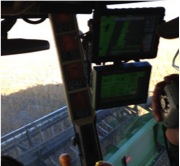
 g something because I’m not real mechanical compared to my brother and nephews. Now, the combine drives itself – quite literally – while using GPS locked onto a Russian navigation satellite that transmits to a receiver mounted on the roof. If that wasn’t enough to blow your mind, all imaginable metrics from the field, the fertilizer used, and the current yield, are monitored by software that is displayed on three iPads mounted in the cockpit. All of this technology has driven yield gains and efficiency, which my dad would have never believed. Global demand for corn and soybeans is rising and my family is doing everything it can to meet that demand – now if they would only get paid a fair price – that’s a whole blog for another time.
 have transformed into a closed loop aquaponics system. What is that you may ask? Basically raising fish in tanks with a twist where the waste from the fish is actually used to fertilize plants, which are in turn grown hydroponically (in water). The whole system relies on some sophisticated filtration but uses very little energy and wastes very little water but on a small scale can produce protein, Tilapia fish,
  and fresh organic vegetables 24/7/365 in a place like Minnesota where it’s 13 degrees and dark more than it’s light this time of year.
  The view from the suburbs